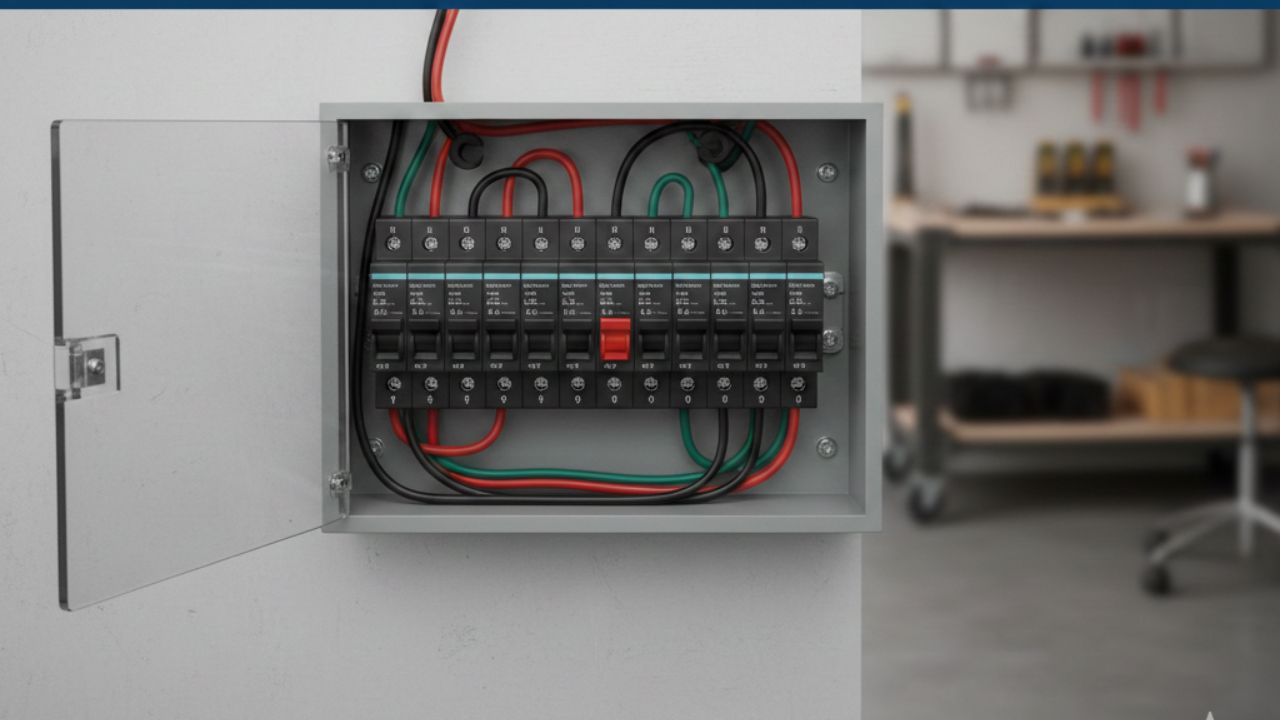
Electrical safety is a crucial concern in modern homes, offices, and industrial environments. One of the most important devices that ensures safety in electrical systems is the circuit breaker. But what exactly is a circuit breaker, and why is it so essential in protecting electrical circuits from damage and hazards?
A circuit breaker is an automatic electrical switch designed to protect circuits from overload, short circuits, and electrical faults. When electrical current exceeds safe levels, the circuit breaker automatically disconnects the power supply to prevent fire risks, equipment damage, and electrical shocks.
In today’s world, where we rely heavily on electrical appliances, understanding the function, types, and importance of circuit breakers can help homeowners and businesses maintain safe electrical systems.
This article explores the meaning, working principle, types, and advantages of circuit breakers in detail.
What Is a Circuit Breaker
A circuit breaker is an electrical protection device that interrupts the flow of electricity when abnormal conditions occur in a circuit. It works like an automatic safety switch that prevents electrical damage.
The primary purpose of a circuit breaker is to protect electrical wiring and connected devices from overheating or burning due to excessive current flow. Unlike fuses, which must be replaced after breaking, modern circuit breakers can be reset and reused.
Circuit breakers are commonly installed in distribution boards and main power panels in homes, offices, and industries.
How Does a Circuit Breaker Work
The working principle of a circuit breaker is based on detecting abnormal electrical current and interrupting the circuit immediately.
When electrical current flows normally, the circuit breaker allows electricity to pass through without interruption. However, when the current exceeds the rated limit due to overload or short circuit conditions, the internal mechanism activates and cuts off the power supply.
There are three main mechanisms involved in circuit breaker operation:
Thermal Protection Mechanism
This mechanism protects against overload conditions. When too much current flows through wires for a long time, heat builds up. The thermal element inside the circuit breaker expands and triggers the switch to trip.
Magnetic Protection Mechanism
This mechanism protects against short circuits. When a sudden surge of high current occurs, the magnetic coil inside the breaker generates a force that instantly opens the circuit.
Manual Operation Mechanism
Users can manually turn off circuit breakers during maintenance or emergencies for additional safety.
These combined mechanisms make circuit highly reliable for protecting electrical systems.
Types of Circuit Breakers
There are several types of circuit breakers designed for different applications. Understanding these types helps users choose the right protection system.
1. Miniature Circuit Breaker (MCB)
Miniature circuit breakers are commonly used in residential electrical systems. They protect against overload and short circuit faults in low-current circuits.
MCBs are widely installed in home distribution panels because they are compact, reliable, and easy to reset after tripping.
2. Molded Case Circuit Breaker (MCCB)
MCCBs are used in commercial and industrial applications. They can handle higher current ratings compared to MCBs.
MCCBs are ideal for protecting motors, large machines, and heavy electrical loads in factories and commercial buildings.
3. Residual Current Circuit Breaker (RCCB)
The residual current circuit breaker provides protection against electrical leakage currents. It is commonly used to prevent electric shock hazards.
If leakage current is detected, the RCCB immediately disconnects the power supply, protecting users from dangerous shocks.
4. Air Circuit Breaker (ACB)
Air circuit breakers are used in high-power industrial applications. They operate using air as the arc extinguishing medium.
These breakers are installed in large electrical distribution systems where high voltage protection is required.
5. Vacuum Circuit Breaker (VCB)
Vacuum circuit breakers use vacuum technology to extinguish electrical arcs. They are highly efficient and require low maintenance.
VCBs are commonly used in medium-voltage power systems and industrial installations.
Importance of Circuit Breakers in Electrical Safety
The importance of circuit breakers cannot be ignored in modern electrical installations.
Protection Against Fire Hazards
One of the main causes of electrical fires is overheating due to excessive current flow. Circuit breakers prevent overheating by disconnecting the circuit when abnormal conditions occur.
Protection of Electrical Appliances
Sensitive devices such as televisions, computers, and refrigerators can be damaged by voltage fluctuations. Circuit breakers help protect these appliances from electrical surges.
Prevention of Electric Shock
Modern circuit breakers, especially RCCBs, help reduce the risk of electric shock by detecting leakage current.
System Stability
Circuit breakers help maintain stable electrical distribution by isolating faulty circuits without affecting the entire system.
Circuit Breaker Price Factors
The price of a circuit breaker varies depending on several factors.
Brand and Quality
High-quality branded circuit breakers are more expensive but offer better durability and safety performance.
Current Rating
Circuit breakers with higher current ratings usually cost more because they are designed for heavy electrical loads.
Type of Circuit Breaker
Industrial circuit breakers such as MCCBs and ACBs are more expensive than residential MCBs.
Technology Features
Smart and advanced circuit breakers with monitoring features may have higher prices.
Maintenance Tips for Circuit Breakers
Proper maintenance can increase the lifespan of circuit breakers.
-
Regularly inspect electrical panels.
-
Avoid overloading electrical circuits.
-
Hire professional electricians for installation.
-
Replace damaged breakers immediately.
-
Keep electrical panels clean and dry.
Following these tips helps maintain safe electrical systems.
Circuit Breaker vs Fuse
Many people confuse circuit breakers with fuses. Both devices provide protection, but they work differently.
Fuses melt and need replacement after tripping, while circuit breakers can be reset and reused.
Circuit breakers are more convenient and widely used in modern electrical systems due to their reliability and safety features.
Applications of Circuit Breakers
Circuit breakers are used in many areas.
Residential Buildings
Protect household wiring and appliances from electrical faults.
Commercial Buildings
Provide protection for office equipment and lighting systems.
Industrial Plants
Protect heavy machinery and production equipment.
Power Distribution Systems
Used in electrical grids to maintain stable power supply.
Future Trends in Circuit Breaker Technology
Technology is improving circuit breaker design and functionality.
Smart circuit breakers are becoming popular because they allow remote monitoring and automatic control using digital systems.
These smart devices help detect faults faster and improve electrical safety management.
Choosing the Right Circuit Breaker
When selecting a circuit breaker, consider these factors:
-
Electrical load requirements
-
Voltage and current ratings
-
Installation environment
-
Brand reputation
-
Safety certifications
Consulting professional electricians can help make the right choice.
Conclusion
In conclusion, the circuit breaker is one of the most important safety devices in modern electrical systems. It protects homes, offices, and industries from electrical hazards such as overloads, short circuits, and electrical fires.
Understanding how circuit breakers work, their types, and maintenance requirements helps ensure safe electrical usage. As technology continues to advance, smart circuit breakers are becoming more popular, offering better monitoring and protection features.
Investing in high-quality circuit breakers and maintaining them properly is essential for long-term electrical safety and system reliability.
Whether for residential or industrial use, circuit breakers play a vital role in protecting lives and valuable electrical equipment from unexpected electrical faults.
Author

john@gmail.com
Related Posts

HappyMod APK Download for Android Unlimited Free Games 2026
HappyMod APK Download for Android Unlimited Free Games 2026 In the ever-evolving world of mobile gaming, players continually seek ways to enhance...
Read out all
Unique Features and Services Offered by Geedup
Welcome to the vibrant world of Geedup, where fashion meets creativity and innovation. If you think clothing is just about style, think...
Read out all
Extensive product Labubu Doll range and high-quality materials
Welcome to the whimsical world of Labubu Dolls, where creativity meets craftsmanship. If you’re on a quest for unique collectibles that tell...
Read out all
Shopping Experience at Cole Buxton Online Store
When it comes to fashion, the shopping experience can make all the difference. Enter Cole Buxton, a brand that seamlessly marries style...
Read out all
Cole Buxton als moderne Streetwear-Marke
Cole Buxton ist mehr als nur eine Marke – sie ist ein Lebensstil. In einer Welt, in der Streetwear oft mit Massenproduktion...
Read out all
Deputy Department – Advanced Streetwear Outlined for Genuine Life
Streetwear has always been more than just a fashion statement. It’s a reflection of culture, identity, and the spirit of rebellion. Among...
Read out all