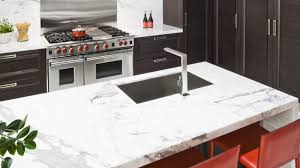
Marble kitchen countertops make sense when the goal is visual impact and premium design—and when the owner is willing to follow a simple care routine.
They are a strong match for:
- Luxury homes
- Bakeries and pastry kitchens
- Display kitchens and showrooms
- Hospitality and brand-led retail spaces
- Property developments positioned at the high end
They are not ideal for buyers expecting a zero-maintenance surface like quartz.
The most common mistake? Assuming marble behaves like engineered stone. It doesn’t. Marble is natural and reactive. But with the right finish, daily habits, and realistic expectations, it can age beautifully and develop character over time.
Why Marble Still Defines Luxury Kitchens
1) Visual depth you can’t replicate
Natural veining creates movement and texture that engineered patterns struggle to match. Each slab is one-of-one, which makes marble ideal for signature kitchens and premium listings.
Buyer tip: Always view full slabs—not just small samples. Veining can shift dramatically across the stone.
2) Naturally cool surface (excellent for pastry work)
Marble stays cooler than many materials, which makes it practical for dough prep and baking-focused kitchens.
3) Unique slab character
Unlike printed patterns, natural marble ensures no two kitchens look identical. For brands and developers, that uniqueness supports higher-end positioning.
Cons You Must Know (Stains, Etching, Scratches)
Marble contains calcium carbonate, which reacts with acids.
Common causes of etching:
- Lemon juice
- Vinegar
- Tomato sauce
- Wine
Staining vs. Etching — What’s Easier to Fix?
- Stains come from absorption (oil, coffee, curry). Many can be improved with stain treatments and proper sealing.
- Etching is a surface reaction. Light marks may be improved with polishing products. Deep etching often requires professional refinishing.
Scratches and Chips
Marble is softer than granite and many quartzites. Heavy cookware dropped near edges or sinks can cause chips.
In commercial settings, edge profile choice and corner protection matter more than most buyers expect.
Marble Kitchen Countertops Cost (Realistic 2026 Breakdown)
When researching marble kitchen countertop costs, pricing can feel inconsistent. That’s because marble isn’t a simple per-square-foot product.
What affects cost most:
- Stone selection (common vs premium slabs)
- Thickness (2 cm vs 3 cm)
- Fabrication (sink cutouts, waterfall ends, vein matching)
- Edge profile complexity
- Installation logistics
Typical 2026 Installed Range (US market):
- Standard marble: $60–$120 per sq ft
- Premium marble: $120–$250+ per sq ft
- High-end or rare slabs: Can exceed $300 per sq ft
Cost control tip: Choose simpler edges and reduce seam complexity to manage budget without losing visual impact.
Best Marble for Kitchen Countertops
When buyers search for the best marble for kitchen countertops, three names usually lead the conversation.
Carrara vs Calacatta vs Statuario
- Carrara marble
Softer, blended veining. Often more budget-friendly. - Calacatta marble
Bold, dramatic veining with higher contrast. Positioned as premium. - Statuario marble
Bright white base with strong veining. Often limited and priced accordingly.
Honed vs Polished Finish
- Honed (matte): Hides etching better. Popular for busy kitchens.
- Polished (glossy): More reflective but shows etching faster.
White vs Darker Marble
- White marble feels clean and high-end, but glossy finishes may highlight etching.
- Darker marble may hide daily marks, though scratches can show lighter ones.
Smart rule: Busy kitchens that still want marble often choose a honed finish for a more forgiving look.
Marble vs Quartz vs Granite
Choosing the right surface depends on lifestyle.
- Granite: Strong durability with natural variation
- Quartz: Lower maintenance, engineered consistency
- Marble Kitchen Countertops: Best where aesthetic impact matters and care is expected
Marble performs especially well in show kitchens, hospitality, and luxury homes, where patina is accepted as part of the design’s story.
Marble Kitchen Countertop Maintenance (Simple Routine)
Teams that keep morale looking sharp follow consistent habits.
Daily
- Wipe spills quickly
- Use stone-safe cleaner
- Dry surface after cleaning
Weekly
- Inspect for staining
- Clean around sink edges carefully
Habits That Matter Most
- Cutting boards prevent scratches
- Coasters reduce drink rings
- Trivets protect against thermal stress
Small habit, big payoff: Dry the surface completely to reduce watermarks—especially on polished finishes.
Sealing Marble Countertops (How Often + Best Practices)
Marble should be sealed to reduce stain risk.
Does sealing stop etching?
No. Sealing slows absorption but does not prevent acid reactions.
Simple Water Test
- Place a few drops of water on the surface
- Wait a few minutes
- If the area darkens, resealing may be needed
How Often to Seal
- High-traffic kitchens: More frequently
- Light-use kitchens: Less often
- Honed finishes benefit from consistent sealing
Think of sealing as scheduled maintenance—like servicing appliances or checking grout.
How to Prevent Stains & Etching
The Acid Rule
If it’s acidic, wipe it immediately.
Spill Response Steps
- Blot (don’t spread)
- Clean with stone-safe cleaner
- Dry thoroughly
If Etching Happens
- Light marks may improve with marble polishing products
- Deep damage: Professional refinishing restores uniform appearance
Marble stays beautiful when expectations are realistic and response time is fast.
FAQs
1) Is marble hygienic for kitchens?
Yes. With routine cleaning, it’s a safe prep surface.
2) Does marble stain easily?
It can absorb oils and pigments. Sealing plus quick cleanup reduces risk.
3) Can hot pans go on marble?
It tolerates heat, but sudden temperature changes can stress stone. Trivets are safer.
4) What finish is best for a kitchen?
Many professionals recommend honed finishes for active kitchens.
5) How long do marble countertops last?
Decades—when installed properly and maintained consistently.
Who Should Choose Marble Kitchen Countertops
- Bakers and pastry-focused kitchens
- Luxury home builds
- Show kitchens and hospitality projects
- Brands prioritizing visual storytelling
Who Should Skip It
- Buyers needing zero maintenance
- Kitchens with constant acidic cooking and minimal cleanup habits
Showroom Checklist (Before You Decide)
- Choose finish: honed or polished
- Review full slab in actual lighting
- Confirm edge profile and corner protection
- Ask about sealer type and reseal schedule
- Confirm fabrication warranty and service options
Final Verdict
Marble kitchen countertops remain one of the most visually powerful choices in kitchen design. They demand awareness—but reward it with unmatched elegance, natural variation, and long-term character.
Author

john@gmail.com
Related Posts

Discover Labubu Doll United States Plush Collection
Introduction to the Labubu Doll Craze in the United States The Labubu Doll United States plush collection has become one of the...
Read out all
Electrical Work Near Me: Trusted Local Electricians for Fast, Affordable Repairs
Electrical Work Near Me power issues hit a business, shopping mall, or fast-moving eCommerce warehouse, downtime becomes expensive fast. A single...
Read out all
Wooden Work: Master or Dabbler – Expert Tips for Beautiful Creations
Wooden work is a timeless craft that blends creativity, skill, and practicality. From simple shelves to handcrafted furniture, woodworking allows you to...
Read out all
Atta Gondony Wali Machine – Complete Buying Guide (2026)
In 2026, the demand for Atta Gondony Wali machines has significantly increased across Pakistan. From small neighborhood bakeries to large restaurant chains...
Read out all
How Villa Painting Can Instantly Boost Beauty, Value, and Protection
When people think about villa painting, they often think about color first. We do too. But after working on premium homes and...
Read out all
Free Website Hosting and Domain Name Registration: What Is Legitimately Free?
2026 is a great time to spend $0 building a website. I’ve done it myself for quick tests, early storefront pilots, and...
- and projects that needed to go live fast. The trick is choosing the right kind of free—one that does not trap your domain
- and scalable. First
- and your website can stay portable
- early storefront pilots
- Free Domain Name Registration
- Free Web Hosting and Domain Name Registration: What Is Legitimately Free? 2026 is a great time to spend $0 building a website. I’ve done it myself for quick tests
- Free Website Hosting
- Free Website Hosting And Domain Name Registration
- limit your growth
- or force you to start over later. There are three real “free” routes available today: Subdomain hosting Hosting with a free domain (first year) Free credits (students
- professional
- promotions) Make the right choice
- startups
- understand the difference between hosting and a domain. Before comparing free offers