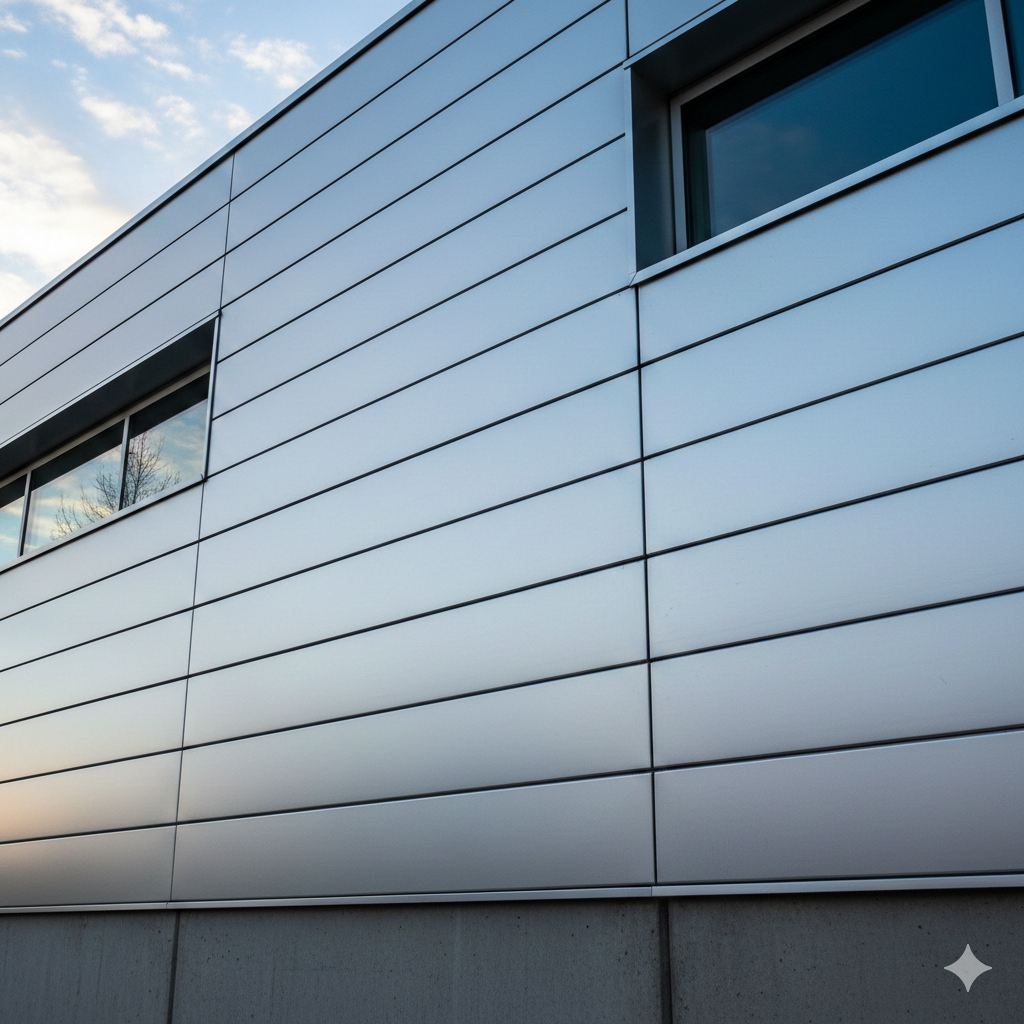
You’ll find metal composite material when you need the strength of metal with lighter weight, better wear resistance, or tailored thermal behavior. Metal composite materials pair a metal matrix or metal skins with reinforcing elements or cores to give you improved strength-to-weight, durability, and design flexibility across industries like aerospace, automotive, construction, and electronics.
This article explains what metal composite materials are, how they’re built, and why they outperform many traditional metals in specific uses. Expect clear examples of common types, practical advantages, and real-world applications so you can judge where these materials might solve challenges in your projects.
Understanding Metal Composite Material
Metal composite materials combine metal with other materials to deliver engineered properties like higher stiffness, lower weight, improved wear resistance, and controlled thermal behavior. You’ll find them in structural panels, load-bearing parts, heat exchangers, and precision components across aerospace, automotive, and electronics.
Definition and Composition
A metal composite material (MCM) refers to a manufactured material made from at least one metallic phase and one distinct reinforcing or core phase bonded together. You’ll commonly see metal skins (aluminum, steel, titanium) bonded to a nonmetallic core (polymer, honeycomb, foam) or a metal matrix reinforced with ceramic fibers/particles.
Composition controls performance: skin thickness, core type, and bond quality determine bending stiffness and impact resistance. Manufacturing methods include co-extrusion, bonding/adhesive lamination, powder metallurgy, and infiltration. Each method affects microstructure, interface strength, and final tolerances.
Key Properties
Metal composites deliver a tailored balance of mechanical and thermal properties so you can design to specific needs. Expect high specific stiffness and strength-to-weight ratio when metals pair with lightweight cores or ceramic reinforcements. You’ll also gain improved wear and abrasion resistance from hard particulate or fiber reinforcements.
Thermal stability and controlled coefficient of thermal expansion (CTE) are typical when you use metals with matching reinforcements. Corrosion resistance depends on metal choice and coatings. Critical practical properties to check: bond/interface strength, fatigue resistance, manufacturability, and recyclability.
Common Types
- Metal-faced sandwich panels: metal skins (Al, steel) bonded to polymer or honeycomb cores for facades, aircraft interiors, and cladding.
- Metal Matrix Composites (MMCs): metallic matrix (Al, Mg, Ti) reinforced with ceramics (SiC, Al2O3) for bearings, brake rotors, and high-temperature parts.
- Laminated metal composites: alternating metal and polymer or metal layers for tailored stiffness and damping in electronics or structural members.
When selecting a type, match the material to load case, operating temperature, corrosive environment, and fabrication constraints. Use standardized testing data for tensile, flexural, and fatigue behavior to validate your choice.
Applications and Advantages
You get stronger, lighter components that resist weathering and wear while allowing design flexibility and improved energy performance.
Uses in Construction and Architecture
You can use metal composite panels for cladding, roofing, and curtain walls where flatness, dimensional stability, and a uniform finish matter.
Aluminum-based laminates are common for exterior facades because they resist corrosion and accept high-quality paints and anodized finishes.
Metal matrix composites (MMCs) serve in structural elements where higher stiffness-to-weight ratio and localized wear resistance are needed, such as support brackets, flashing, and framing members.
Benefits for your projects include improved thermal movement control and long service life with low maintenance.
You also gain precise panel tolerances for tight jointing and complex geometries, which helps when integrating rainscreens, insulation, or photovoltaic mounts.
Typical applications span commercial towers, transit stations, and specialized roofing where both aesthetics and durable performance are required.
Benefits over Traditional Materials
You achieve weight reduction without sacrificing strength, which lowers loading on foundations and simplifies handling during installation.
Compared with steel or solid aluminum, composites can deliver higher specific strength and tailored thermal expansion through material selection and orientation.
You benefit from enhanced wear and corrosion resistance by embedding ceramic or particulate reinforcements into a metal matrix.
This improves longevity in high-traffic or abrasive environments and reduces lifecycle cost.
Metal composites also permit combining surface aesthetics with structural cores, so you can match appearance requirements while keeping production and machining costs down.
Market Trends
You’ll find rising demand for metal composite systems in urban retrofit and lightweight transportation sectors.
Architects specify composite cladding more often to meet tighter energy codes, and manufacturers respond with larger-format panels and pre-finished options that cut onsite labor.
Industry investment focuses on scaling MMC production and improving recyclability of layered composites.
Producers push for hybrid designs that integrate thermal breaks or insulation, and suppliers expand certification for fire performance and wind-load ratings to ease code compliance.
Expect continuing growth where weight savings, durability, and finish quality directly influence project cost or performance.
Author

admin@genesisgoldassets.com
Related Posts

Discover Labubu Doll United States Plush Collection
Introduction to the Labubu Doll Craze in the United States The Labubu Doll United States plush collection has become one of the...
Read out all
Electrical Work Near Me: Trusted Local Electricians for Fast, Affordable Repairs
Electrical Work Near Me power issues hit a business, shopping mall, or fast-moving eCommerce warehouse, downtime becomes expensive fast. A single...
Read out all
Marble Kitchen Countertops: Pros, Cons, Costs & Care (Complete 2026 Guide)
Marble kitchen countertops make sense when the goal is visual impact and premium design—and when the owner is willing to follow a...
Read out all
Wooden Work: Master or Dabbler – Expert Tips for Beautiful Creations
Wooden work is a timeless craft that blends creativity, skill, and practicality. From simple shelves to handcrafted furniture, woodworking allows you to...
Read out all
Atta Gondony Wali Machine – Complete Buying Guide (2026)
In 2026, the demand for Atta Gondony Wali machines has significantly increased across Pakistan. From small neighborhood bakeries to large restaurant chains...
Read out all
How Villa Painting Can Instantly Boost Beauty, Value, and Protection
When people think about villa painting, they often think about color first. We do too. But after working on premium homes and...
Read out all