- 0
- 1,096 word
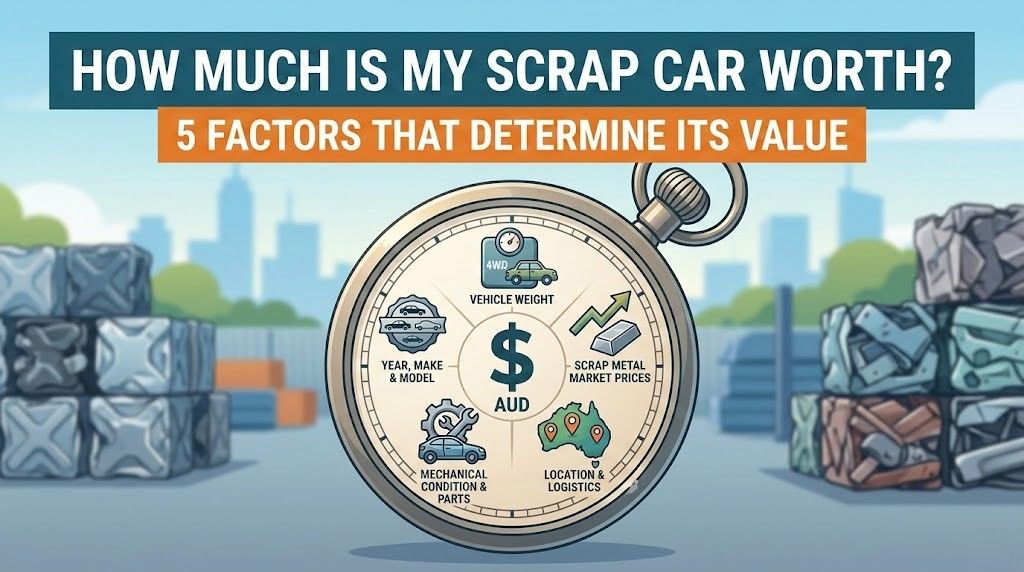
The value of a scrap car in Australia typically ranges from $200 to $15,000, depending on its weight, condition, and current metal market rates. Determining the exact price requires evaluating specific automotive attributes that wreckers and recyclers use to calculate their offers.
Selling an old vehicle often feels like guesswork. However, the scrap industry operates on data-driven metrics rather than sentiment. Whether your car is a rusted sedan sitting in a paddock or a modern SUV with a blown engine, its value lies in its raw materials and salvaged components. This guide breaks down the primary elements that dictate your payout.
1. The Total Weight and Size of the Vehicle
Vehicle weight is the most significant factor in determining scrap value because recyclers pay based on the tonnage of steel and aluminium. Heavier vehicles contain more recyclable metal, which directly increases the cash offer.
To calculate value, wreckers look at the “curb weight” of your car. A compact hatchback, such as a Toyota Yaris, weighs approximately 1,050 kg, while a large 4WD like a Toyota LandCruiser can exceed 2,600 kg. Because the heavy-melt steel content is higher in the 4WD, the base scrap price is naturally higher.
| Vehicle Category | Average Weight (kg) | Estimated Scrap Value Range (AUD) |
| Compact/Hatchback | 1,000 – 1,300 | $200 – $600 |
| Sedan/Wagon | 1,400 – 1,700 | $500 – $900 |
| SUV/Light Commercial | 1,800 – 2,200 | $800 – $1,500 |
| Heavy 4WD/Van | 2,300 – 3,000+ | $1,200 – $3,500+ |
2. Current Market Price of Scrap Metal
Scrap metal prices fluctuate daily based on global demand and local Australian export markets. Since a car is composed of roughly 65% steel and 25% aluminium, the London Metal Exchange (LME) rates influence what a local wrecker can offer you.
When international demand for steel is high, local yards increase their buying prices. Conversely, if the market is oversaturated, prices drop. It is also important to note the value of “non-ferrous” metals found in your car. Components like copper wiring, brass fittings, and lead-acid batteries carry a higher price per kilogram than the steel chassis.
3. Year, Make, and Model
The specific make and model determine the demand for used spare parts, which adds a premium to the base scrap metal price. If your vehicle is a popular model in Australia, such as a Mazda 3 or a Holden Commodore, wreckers value it higher because they can resell the doors, lights, and interior trim.
-
Common Models: Parts for high-volume cars sell quickly, leading to better offers.
-
European Imports: While luxury cars like BMW or Audi have high initial costs, their parts are often harder to move, which sometimes results in a lower-than-expected scrap offer unless the specific mechanical components are in demand.
-
Age Matters: A vehicle from 2015 is worth significantly more than one from 1995 because its technology and body panels are still relevant for repairs on other road-going cars.
4. Mechanical Condition and Part Salvageability
A “complete” car is worth more than a “stripped” shell because it contains high-value components like the catalytic converter and engine. If your vehicle still runs or has a functional transmission, it transitions from being mere “scrap” to “salvage,” which commands a higher price point.
Valuable parts that wreckers look for include:
-
Catalytic Converters: These contain precious metals like Platinum, Palladium, and Rhodium.
-
Alloy Wheels: Aluminium wheels are worth more than standard steel rims.
-
Engines and Gearboxes: If these are in working order, they are refurbished and resold.
-
GPS and Electronics: Modern infotainment systems hold significant resale value.
If you are looking for a reliable valuation in South East Queensland, services like Cash For Unwanted Cars Brisbane provide quotes based on these specific salvageable features, ensuring you aren’t just getting the “crush” price for a car that still has good parts.
5. Location and Towing Logistics
Distance from the salvage yard impacts the final amount you receive because transport costs are factored into the quote. If a tow truck has to travel 50 kilometres to reach your property, the fuel and labour costs reduce the net profit of the transaction.
Fortunately, most reputable Australian car removalists offer free towing as part of their service package. To maximise your return, choose a provider with a local presence. Proximity to major industrial hubs also helps, as yards near ports or metal processing plants have lower overheads and can pass those savings on to the seller.
Pros and Cons of Different Disposal Methods
Choosing how to get rid of your unwanted vehicle depends on your priority: speed, effort, or maximum dollar value.
Selling to a Licensed Wrecker
-
Pros: Instant payment, free towing, no need for a Roadworthy Certificate (RWC), and handles all Department of Transport paperwork.
-
Cons: You will not get “retail” price for the vehicle.
Private Sale (Marketplace/Gumtree)
-
Pros: Potential for a higher price if the car is still driveable.
-
Cons: Requires an RWC in most states, involves dealing with “tyre-kickers,” and takes significant time.
Parting it Out Yourself
-
Pros: Highest potential revenue by selling individual pieces.
-
Cons: Requires mechanical tools, space to store a dismantled shell, and months of waiting for buyers.
Target Audience: Who Should Use Scrap Services?
The scrap car market serves specific groups of vehicle owners in Australia. You are the ideal candidate for a cash-for-cars service if you fall into these categories:
-
Written-off Vehicle Owners: Those with cars deemed “Total Losses” by insurance companies.
-
Statutory Write-offs: Vehicles that cannot legally be registered again due to structural damage.
-
Mechanical Failures: Owners facing repair bills (e.g., $3,000 for a new transmission) that exceed the car’s market value.
-
Estate Clearances: Individuals needing to quickly remove old vehicles from a property they are selling.
Final Steps to Prepare Your Car for Sale
Once you decide to sell, follow these 3 essential steps to ensure a smooth transaction:
-
Remove Personal Belongings: Check under seats, in the glovebox, and in the boot. Don’t forget to clear out your e-Toll tags and sunglasses.
-
Remove the Number Plates: In Australia, you must return your plates to the transport authority (e.g., TMR in QLD or Service NSW) to cancel your registration and claim any remaining “rego” refund.
-
Have Your ID Ready: Australian law requires scrap metal buyers to verify the identity of the seller to prevent vehicle theft and fraud.
Summary of Value Determination
| Factor | Impact on Price | Why it Matters |
| Weight | High | Dictates the volume of raw steel and iron. |
| Completeness | High | Missing batteries or converters significantly lower the quote. |
| Make/Model | Medium | Determines the resale demand for spare parts. |
| Location | Low/Medium | Affects towing costs and logistical ease. |
The value of your scrap car is a combination of its physical weight and the hidden gems under the bonnet. By understanding these 5 factors, you can approach buyers with confidence and ensure you receive a fair, competitive price for your old vehicle.
Author

john@gmail.com
Related Posts
How Can Spotlights Transform Residential Lighting in Your Home?
- 0
- 1,368 word
Lighting plays a powerful role in shaping the look and feel of any home. The right spot lights can dramatically enhance residential...
Read out all
Best Stainless Steel Under‑Cabinet Range Hood Features Explained
- 0
- 653 words
Stainless steel under‑cabinet range hoods are an essential upgrade in modern kitchens, combining powerful ventilation with durable, easy‑to‑maintain design. These hoods are...
Read out allWhat Makes Baileys 1 Litre Ideal for Creamy Cocktail Recipes?
- 0
- 649 words
Creating smooth and indulgent cocktails often depends on the quality and consistency of the ingredients used. Cream-based liqueurs are especially popular for...
Read out all
11 Plastic Surgery Marketing Strategies To Get More Leads
- 0
- 970 words
Plastic surgery clinics operate in a highly competitive market. Potential patients often research multiple clinics before booking a consultation. To stand out,...
What Free Trademark Search by Name Tools Can and Cannot Detect Now
- 0
- 712 words
Business names stick once you build around them. You’ve got a name you love. It sounds right, fits your brand, and you’re...
Read out allHelping Children Cope with Domestic Violence Through Counselling
- 0
- 846 words
Domestic violence does not only affect partners in a relationship—it also has a deep emotional and psychological impact on children. When children...
Read out all