- 0
- 952 words
NSW scrapping laws require vehicle owners to cancel registration and return number plates to Service NSW before disposing of a car for scrap or parts. Following these regulations protects you from legal liability and ensures the vehicle undergoes environmentally responsible recycling.
Selling an old car involves more than just handing over the keys. In New South Wales, the Scrap Metal Industry Act 2016 and Transport for NSW regulations dictate how you must handle the sale. Navigating these rules ensures you remain compliant with state law while securing the best value for your vehicle.
The Legal Framework for Scrapping Vehicles in NSW
NSW laws prohibit scrap metal dealers from paying cash for scrap metal, including motor vehicles. To comply with the Scrap Metal Industry Act 2016, dealers must pay via electronic funds transfer (EFT) or a crossed cheque. This law eliminates untraceable transactions and reduces the trade of stolen vehicles.
Licensed dealers must also record 3 specific details for every transaction:
-
The Seller’s Identity: Dealers must verify your NSW Driver Licence or Passport.
-
The Vehicle’s VIN: Every car has a 17-digit Vehicle Identification Number that the dealer records.
-
Payment Records: Dealers maintain a digital trail of the payment made to the seller.
Step 1: Managing Your Number Plates and Registration
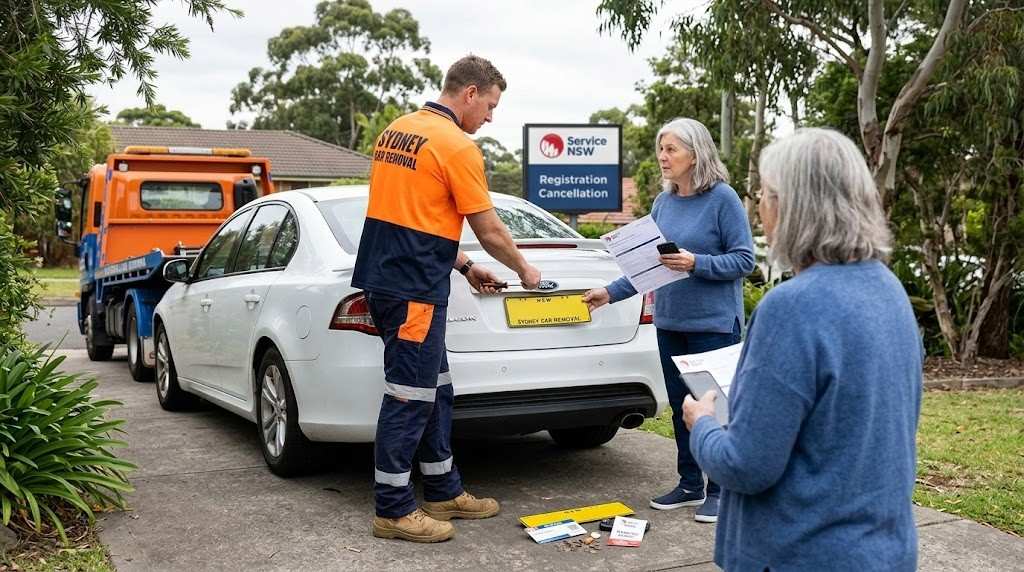
You must remove your number plates and return them to a Service NSW centre to cancel your vehicle’s registration. Number plates remain the property of the Crown in NSW, and keeping them after selling a car to a wrecker is a regulatory breach.
Returning your plates triggers 2 important financial benefits:
-
Registration Refund: Transport for NSW calculates a pro-rata refund for any remaining full months of registration.
-
CTP Green Slip Refund: Once the registration is cancelled, you can contact your insurance provider for a refund on the unused portion of your compulsory third-party insurance.
| Action | Legal Requirement | Financial Outcome |
| Remove Plates | Mandatory for all scrap sales | Prevents misuse of your identity |
| Return to Service NSW | Required within 14 days | Pro-rata refund of rego fees |
| Lodge Notice of Disposal | Immediate upon sale | Ends your liability for fines/tolls |
Step 2: Identification and Proof of Ownership
To sell a car for scrap, you must provide valid photo identification to the buyer. This requirement ensures the person selling the vehicle has the legal right to do so, preventing the sale of encumbered or stolen assets.
Acceptable forms of identification include 3 primary documents:
-
NSW Photo Card: A state-issued ID for non-drivers.
-
Australian Driver Licence: The most common form of identity verification.
-
International Passport: A valid travel document with a current photo.
If the vehicle registration is in a deceased person’s name or a company name, you must provide additional paperwork, such as a death certificate or a letter of authority on company letterhead.
Step 3: Dealing with Encumbered Vehicles (Finance)
A car with an active “encumbrance” or “security interest” belongs to a finance company until the loan is paid in full. Selling a vehicle with a debt attached without the lender’s permission is illegal in Australia.
Check the Personal Property Securities Register (PPSR) to confirm your vehicle’s status. There are 2 ways to handle a car with finance:
-
Pay the Payout Figure: Pay the remaining balance to the bank and obtain a clearance letter.
-
Lender Agreement: Some wreckers work with finance companies to settle the debt as part of the purchase price.
Target Audience for This Guide
This legal guide assists 4 specific groups of people in Sydney:
-
Private Car Owners: Residents with broken, old, or “write-off” vehicles in their driveways.
-
Estate Executors: People managing the disposal of assets after a family member passes away.
-
Used Car Buyers: Individuals who bought a “lemon” and need a legal way to recoup costs.
-
Property Managers: Those dealing with abandoned vehicles on private land.
Features and Functions of Professional Removal
Professional removal services like Sydney Car Removal simplify the legal process by providing the necessary documentation on the spot. They act as a bridge between the car owner and the recycling facility, ensuring all environmental and legal standards are met.
visit: https://www.sydneycarremoval.com.au/
Pros and Cons of Professional Scrapping
| Pros | Cons |
| Instant Legal Transfer: Dealers handle the paperwork immediately. | Fixed Pricing: Metal market rates determine the price, not emotional value. |
| Free Towing: Most services provide a tilt-tray truck at no cost. | Identity Required: You cannot sell a car anonymously in NSW. |
| Eco-Friendly: Recycling saves 2,500kg of iron ore per car. | Plate Removal: You must manually remove plates before the truck arrives. |
Situational Relevance: Why Laws Matter Now
Climate goals and stricter police enforcement make legal scrapping more relevant today than in previous years. Improperly dumped cars result in heavy fines from local councils, often exceeding $2,000. Additionally, NSW has 5 major recycling zones where police regularly audit scrap metal yards to ensure every vehicle has a paper trail.
Using a licensed professional ensures your car does not end up as an abandoned vehicle on the side of the M4 or M5 motorways, which would leave you legally responsible for recovery costs.
Final Checklist for a Legal Sale
Follow these 4 final steps to ensure a smooth transaction:
-
Clear the Cabin: Remove 5 common items, including E-Toll tags, dashcams, parking permits, loose change, and garage remotes.
-
Verify the Dealer: Ensure the buyer holds a valid Motor Dealer Licence or Scrap Metal Dealer registration.
-
Check the Payment: Confirm the payment is via EFT or cheque to stay compliant with the cash ban.
-
Keep the Receipt: Retain the disposal receipt for 7 years for your personal tax and legal records.
By following this guide, you ensure your car disposal is fast, legal, and profitable. Knowing the law protects your wallet and your reputation, allowing you to move on from your old vehicle with total peace of mind.
Author

john@gmail.com
Related Posts
How Can Spotlights Transform Residential Lighting in Your Home?
- 0
- 1,368 word
Lighting plays a powerful role in shaping the look and feel of any home. The right spot lights can dramatically enhance residential...
Read out all
Best Stainless Steel Under‑Cabinet Range Hood Features Explained
- 0
- 653 words
Stainless steel under‑cabinet range hoods are an essential upgrade in modern kitchens, combining powerful ventilation with durable, easy‑to‑maintain design. These hoods are...
Read out allWhat Makes Baileys 1 Litre Ideal for Creamy Cocktail Recipes?
- 0
- 649 words
Creating smooth and indulgent cocktails often depends on the quality and consistency of the ingredients used. Cream-based liqueurs are especially popular for...
Read out all
11 Plastic Surgery Marketing Strategies To Get More Leads
- 0
- 970 words
Plastic surgery clinics operate in a highly competitive market. Potential patients often research multiple clinics before booking a consultation. To stand out,...

What Free Trademark Search by Name Tools Can and Cannot Detect Now
- 0
- 712 words
Business names stick once you build around them. You’ve got a name you love. It sounds right, fits your brand, and you’re...
Read out allHelping Children Cope with Domestic Violence Through Counselling
- 0
- 846 words
Domestic violence does not only affect partners in a relationship—it also has a deep emotional and psychological impact on children. When children...
Read out all